


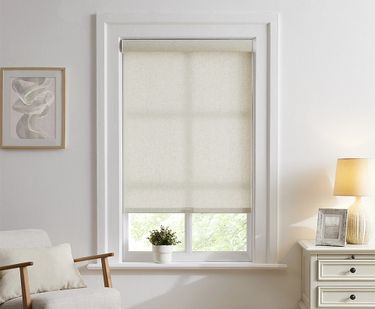
What Are the Best Child-Safe Window Shades?
The best child safe window shades are cordless or motorized shades with no accessible operating cords, especially in bedrooms, playrooms, and other areas where young children spend time. Among the available options, cordless shades remove the strangulation hazard associated with exposed cords, while motorized shades can provide convenient operation without requiring children to handle cords or chains.
For families choosing window coverings, safety should come before color or decorative style. A well-designed child safe window treatment should keep operating components out of a child's reach while still providing the light control, privacy, and appearance needed for everyday living. The U.S. Consumer Product Safety Commission (CPSC) has specifically advised families with young children to choose cordless window coverings.
Why Child Safe Window Shades Are Important for Families
Window shades are usually treated as ordinary home furnishings, but their operating mechanisms can create a hidden risk for young children. Children naturally explore their surroundings, and a dangling cord or loop can become accessible when a child climbs onto a bed, sofa, toy box, or other nearby furniture.
According to the CPSC, an average of about nine children age five and younger died each year from strangulation involving cords on window blinds, shades, draperies, and other window coverings based on its cited historical data. The agency also reported nearly 200 incidents involving children up to age eight between January 2009 and December 2020.
That is why child safe window shades should be evaluated by their actual design rather than simply by a “child-friendly” label. Families should look for:
- No exposed or dangling operating cords
- Cordless or motorized operation
- Secure installation appropriate for the window
- A shade that fits the window correctly
- Materials and components suitable for normal household use
Furniture placement matters, too. Even when a window covering has safety features, beds, cribs, chairs, and other climbable furniture should ideally be positioned away from window covering cords and potentially accessible window areas. CPSC recommends moving such furniture away from window covering cords where possible.
Cordless Window Shades for Child Safety at Home
Cordless window shades are one of the most straightforward choices for families looking for child safe window treatments. Instead of using a pull cord or loop, the shade is raised or lowered without leaving an accessible cord hanging beside the window.
This design is particularly useful in children's bedrooms and play areas, where children may spend time unsupervised or move around unpredictably. It also creates a cleaner appearance because there is no cord interrupting the visual line of the window.
For parents replacing older blinds, it is important not to assume that simply shortening or tying a cord makes a product completely safe. CPSC states that these measures may reduce the risk but do not eliminate the hazard. Its strongest recommendation for homes with young children is to replace corded coverings with cordless products.
A practical approach is to check every window covering rather than focusing only on the child's bedroom. Living rooms, guest rooms, and frequently visited spaces can also become children's play areas, particularly when toddlers are visiting relatives or friends.
Motorized Window Shades as a Safe Alternative
Motorized shades offer another approach to child safe window treatments. Instead of manually pulling a cord, homeowners can operate the shade through a motorized mechanism, remote control, or compatible smart-home system, depending on the product.
The main safety advantage is the absence of an exposed operating cord. This makes motorized shades particularly suitable for hard-to-reach windows, large windows, and rooms where parents want to adjust light without giving children access to a manual control.
However, “motorized” should not automatically be interpreted as “completely child-safe.” Parents should still examine the entire installation, including the shade, controls, wiring where applicable, mounting hardware, and nearby furniture. Batteries, remotes, and other small components should also be kept away from young children.
Motorization can also improve everyday convenience. For example, parents can adjust a bedroom shade before a child goes to sleep or raise a living-room shade without reaching over furniture.
Best Child Safe Window Shades for Bedrooms and Living Rooms
The safest choice can vary according to the room. A child's bedroom usually has different requirements from a family living room, so choosing shades based on the actual environment is more practical than selecting one style for every window.
| Room | Key Priorities | Recommended Shade Features | Why It Works |
|---|---|---|---|
| Children's Bedroom | Safety, light control, privacy | Cordless or motorized, blackout or room-darkening fabric | Reduces accessible cords while helping create a darker sleeping environment |
| Nursery | Maximum safety, gentle light control | Cordless shades, soft light-filtering or blackout fabric | Keeps operating components away from children and helps manage daytime light |
| Playroom | Safety, durability, easy operation | Cordless or motorized shades, easy-care fabrics | Supports frequent use while minimizing accessible operating cords |
| Living Room | Safety, privacy, natural light, appearance | Cordless or motorized roller, Roman, or cellular shades | Balances child safety with everyday comfort and interior style |
For Children's Bedrooms
Bedrooms often benefit from shades that combine safety with light control. A blackout or room-darkening option can help reduce early-morning sunlight, while a cordless or motorized design removes the need for accessible pull cords.
For a kids room window treatment, consider the window's position in relation to the bed, crib, dresser, and other furniture. A safe shade can still become part of a risky setup if furniture allows a child to climb directly toward the window or its operating components.
For Living Rooms
Living rooms typically require a balance between privacy, natural light, and appearance. Roller shades, Roman shades, cellular shades, and dual shades can all be considered, provided their operating mechanisms are appropriately designed.
For families with young children, cordless and motorized versions are generally more practical than traditional corded coverings.
Materials Used in Safe Window Shades for Kids
Material selection matters, but it should not be confused with the primary safety issue. A shade made from premium fabric is not necessarily safer if it still has an accessible operating cord. For child safe window shades, the operating design should be considered first, followed by fabric performance and durability.
For family spaces, common considerations include:
- Light-filtering fabrics: Useful when a room needs natural daylight without excessive glare.
- Blackout fabrics: Suitable for bedrooms where stronger light control is important.
- Linen-textured fabrics: Can provide a softer, residential appearance while maintaining a clean window treatment design.
- Cellular materials: Their layered structure can provide light control and insulation benefits, depending on the specific product.
Parents should also consider how easily the material can be maintained. Children's rooms may experience fingerprints, dust, spills, and frequent contact, so practical cleaning requirements are worth checking before purchase.
Most importantly, families should evaluate the complete product rather than focusing only on fabric. A safe window covering combines an appropriate material with secure mounting, suitable dimensions, and a child-conscious operating mechanism.
Custom Window Shades for Child-Friendly Homes
Custom sizing is particularly valuable when safety is part of the purchasing decision. An incorrectly sized shade can leave gaps around the window, interfere with furniture placement, or require an inconvenient installation position.
Custom window shades allow homeowners to select dimensions that correspond more closely to the actual window. This can be useful for unusually wide windows, narrow windows, bay windows, or rooms where several windows have different dimensions.
Customization also helps families coordinate safety with interior design. Instead of choosing between a safe product and an attractive one, homeowners can select the appropriate operating style, fabric, light-control level, and appearance for each room.
When ordering custom child safe window treatments, homeowners should measure carefully and confirm the manufacturer's requirements before placing an order. A professional-looking result depends not only on the fabric but also on accurate dimensions and appropriate installation.
Conclusion: Choosing the Safest Window Shades for Kids
When choosing child safe window shades, the most important question is not simply which style looks best. Start by eliminating accessible cords, then consider the room, window size, light-control needs, operating method, material, and installation.
For homes with young children, cordless window shades are a strong safety-focused choice, while motorized shades can provide an additional combination of convenience and cord-free operation. CPSC specifically recommends cordless window coverings where young children are present.
For families looking for a combination of safety-conscious operation, customizable sizing, and different design options, ULAECY offers a dedicated range of child-safe shades, including cordless, motorized, roller, Roman, cellular, and no-drill styles. Explore the Child Safety collection to compare options for different rooms and window configurations.
Get new arrivals, home design ideas, and exclusive member-only offers.
Contact

If you contact us outside business hours, please send us an email. We typically reply within 24 hours.
Available Hours:
Mon-Fri: 9:00 AM-5:00 PM (EST)
Sat-Sun: 10:00 AM-5:00 PM (EST)
©2026 ULAECY All Rights Reserved.