


How Do Smart Motorized Shades Work with Matter & HomeKit?
Smart motorized shades work with Matter by using a universal smart home standard that allows them to communicate seamlessly with multiple ecosystems, including Apple Home, Amazon Alexa, Google Home, Samsung SmartThings, and Home Assistant. Instead of choosing one platform, homeowners can control compatible smart motorized shades through their preferred app or voice assistant while enjoying faster local communication, reliable automation, and greater privacy.
When combined with HomeKit and Thread technology, modern motorized window shades become more responsive, easier to set up, and better suited for today's connected homes.
As smart home technology continues to evolve, homeowners expect every connected device to work together without complicated setup or compatibility issues. Window coverings are no exception. Today's smart window treatments do much more than open and close automatically—they can become part of a complete home automation system that improves convenience, energy efficiency, and everyday comfort.
What Are Smart Motorized Shades with Matter Protocol?
What Makes Motorized Shades "Smart"?
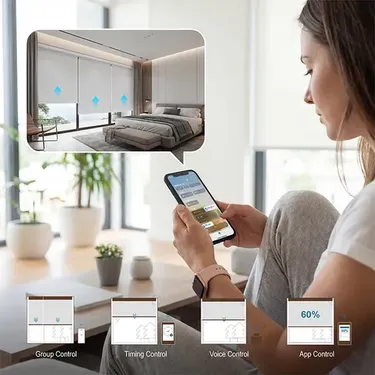
Unlike traditional blinds that must be adjusted manually, smart motorized shades use an integrated electric motor that allows them to open, close, or stop at preset positions automatically. They can be controlled with a remote, smartphone, voice assistant, or scheduled routines, making daily operation more convenient for both small apartments and large homes.
Modern smart window treatments go beyond simple remote control. They can become part of a complete smart home ecosystem, working together with lighting, thermostats, security devices, and other connected products. For example, your shades can automatically lower when the afternoon sun becomes too intense or open gradually in the morning to let in natural daylight.
Motorized operation is also a practical solution for tall windows, hard-to-reach installations, or households that prefer a cleaner appearance without dangling cords. Many homeowners choose motorized window shades not only for convenience but also for improved child safety, a more streamlined interior design, and consistent everyday comfort.
Why Matter Improves Smart Home Compatibility
While smart home products have existed for years, they often required homeowners to choose one ecosystem. Some devices worked only with Apple HomeKit, while others were designed primarily for Amazon Alexa or Google Home. Expanding a smart home sometimes meant installing multiple apps or replacing perfectly functional devices.
Matter changes this approach by introducing a common communication standard. Rather than creating another smart home platform, it provides a shared language that allows compatible devices to work across multiple ecosystems. A single Matter-certified product can communicate with Apple Home, Amazon Alexa, Google Home, Samsung SmartThings, and Home Assistant, giving homeowners much greater flexibility both now and in the future.
Matter also simplifies installation. Instead of following different setup procedures for each ecosystem, many compatible smart motorized shades can be paired simply by scanning a Matter QR code. This reduces configuration time and makes it easier for first-time users to add new devices to their smart home without complicated technical steps.
For homeowners planning to expand their connected home over time, Matter offers another important advantage: long-term compatibility. As new smart devices are added, smart window treatments can continue working within the same ecosystem instead of requiring separate control methods or additional applications.
How Motorized Window Shades Work with HomeKit and Alexa
Controlling Shades with Apple HomeKit
Apple HomeKit allows compatible motorized window shades to be managed directly from the Apple Home app alongside other connected devices. After completing the Matter pairing process, homeowners can organize shades by room, rename individual windows, and create customized scenes that control multiple devices simultaneously.
For example, a "Good Morning" scene can gradually raise bedroom shades while switching on selected lights, helping create a more natural start to the day. In the evening, a "Relax" scene might lower the living room shades before turning on warm ambient lighting.
Because many Matter-enabled automations operate through local communication, commands can often be executed more quickly while reducing reliance on external cloud services. This contributes to a smoother experience when controlling smart motorized shades as part of everyday routines.
Using Alexa and Other Matter-Compatible Platforms
Amazon Alexa offers another convenient way to control motorized window shades using simple voice commands or scheduled routines. Instead of adjusting every shade manually, homeowners can say, "Alexa, close the living room shades," or schedule all bedroom shades to open automatically at sunrise.
One of Matter's greatest strengths is that it removes many ecosystem barriers. Rather than purchasing different versions of smart window treatments for different platforms, homeowners can use the same compatible shades with Google Home, Samsung SmartThings, Home Assistant, and other Matter-supported systems.
Managing multiple windows also becomes much easier. Instead of switching between different manufacturer apps, homeowners can organize dozens of shades by room, floor, or customized scenes within their preferred smart home platform. Whether controlling a single window or an entire home, this unified approach creates a simpler and more consistent user experience.
Thread vs WiFi in Smart Motorized Shades Systems
How WiFi and Thread Connect Smart Devices
When comparing smart motorized shades, one of the biggest differences lies in how they communicate with your smart home. Traditional WiFi-enabled devices connect directly to your home router, making setup familiar for most users. However, every device competes for the same wireless network, which may affect performance as more connected products are added.
Thread takes a different approach. Instead of relying solely on the router, it creates a low-power mesh network where compatible devices communicate with one another. This allows commands to travel more efficiently while reducing power consumption—an important advantage for battery-powered motorized window shades.
For homeowners, the difference is often noticeable in everyday use. Shades respond more quickly, the network remains stable as additional smart devices are added, and rechargeable batteries can operate more efficiently because Thread is designed for low-energy communication.
| Feature | Matter over Thread | Traditional WiFi |
|---|---|---|
| Communication | Local mesh network | Router-based |
| Response Speed | Faster local response | Depends on network traffic |
| Battery Efficiency | Lower power consumption | Higher power usage |
| Multi-platform Support | Matter compatible | Varies by manufacturer |
| Smart Home Expansion | Highly scalable | Limited by WiFi congestion |
Why Matter over Thread Creates a Better Experience
Matter and Thread are designed to complement each other rather than replace one another. Matter provides the common communication standard, while Thread serves as one of the networking technologies that helps compatible devices exchange information efficiently.
One of the biggest advantages is local communication. Instead of sending every command through cloud servers, many Matter-enabled actions can stay within the home's local network. This helps smart motorized shades respond faster while reducing delays caused by internet connectivity.
Another practical benefit is simplified setup. Rather than navigating multiple configuration steps, compatible shades can often be added by scanning a Matter QR code and following the instructions in a preferred smart home platform. Once connected, homeowners can manage multiple shades from a single interface instead of switching between separate applications.
Benefits of Smart Motorized Shades for Modern Homes
More Comfort with Less Daily Effort
One of the most noticeable advantages of smart motorized shades is convenience. Instead of manually adjusting every window throughout the day, homeowners can automate common tasks based on schedules, sunrise and sunset times, or personal routines.
Quiet motor technology also improves the user experience. Smooth, low-noise operation allows motorized window shades to move without disrupting conversations, work, or sleep, making them suitable for bedrooms, home offices, and living spaces alike.
Rechargeable battery systems further reduce maintenance. Without complicated wiring in many installations, homeowners can enjoy a cleaner appearance while simplifying installation and future charging.
Energy Efficiency and Better Indoor Comfort
Natural sunlight plays an important role in indoor temperature. During summer afternoons, automatically lowering smart window treatments can reduce excessive solar heat gain, helping maintain a more comfortable indoor environment. In cooler seasons, opening shades during daylight hours allows more natural warmth to enter the room.
Although energy savings vary depending on climate, window orientation, and insulation, automated shading can become an effective part of a broader energy-management strategy when combined with smart thermostats and lighting controls.
Easy installation also makes today's smart motorized shades accessible to more homeowners. Many modern systems can be installed in a short amount of time without requiring extensive electrical work, allowing users to upgrade existing windows with minimal disruption.
Automation Scenarios Using Smart Window Shades
Making Everyday Routines Smarter
The true value of smart motorized shades becomes clear when they are integrated into everyday routines.
In the morning, bedroom shades can open gradually to let in natural light instead of relying on a loud alarm clock. During the afternoon, south-facing windows can automatically lower to reduce glare while protecting furniture from prolonged UV exposure.
Movie nights become more enjoyable when living room motorized window shades close together with a single voice command or smart scene. Before leaving for vacation, homeowners can schedule shades to open and close automatically, creating the appearance that someone is home while requiring no manual adjustments.
Because Matter supports multiple ecosystems, these automations can work alongside lighting, thermostats, and other connected devices, creating a more coordinated smart home experience.
Privacy Advantages of Local-Control Motorized Shades
Privacy has become an increasingly important consideration as more household devices connect to the internet. One of Matter's key design goals is to reduce unnecessary dependence on cloud communication by allowing many commands to remain within the local home network.
For homeowners, this means everyday actions such as opening or closing smart motorized shades can often be processed locally, helping improve responsiveness while limiting the amount of routine device communication that depends on external servers.
Local control also improves reliability. Even if the internet connection is temporarily unavailable, compatible local automations may continue operating within the home network, providing a more dependable experience for daily routines.
Conclusion: Are Smart Motorized Shades Worth It?
For homeowners building a connected home, smart motorized shades offer far more than remote control. Matter simplifies compatibility across major smart home platforms, while Thread helps deliver faster communication, reliable automation, and efficient local control. Together, these technologies make motorized window shades easier to install, easier to manage, and better prepared for future smart home upgrades.
Choosing smart motorized shades is no longer just about convenience—it's about building a smart home that remains flexible as technology evolves. By combining Matter compatibility, local control, quiet operation, and custom-made designs, ULAECY offers smart window treatments that integrate naturally into today's leading smart home ecosystems while remaining ready for future upgrades.
Get new arrivals, home design ideas, and exclusive member-only offers.
Contact

If you contact us outside business hours, please send us an email. We typically reply within 24 hours.
Available Hours:
Mon-Fri: 9:00 AM-5:00 PM (EST)
Sat-Sun: 10:00 AM-5:00 PM (EST)
©2026 ULAECY All Rights Reserved.