


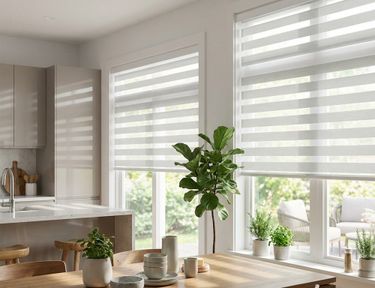
Zebra Shades vs Dual Shades: Which One Fits Your Home?
If your priority is flexible light control with a modern aesthetic, zebra shades are often the better choice; if you value insulation, privacy, and performance, dual shades may be more suitable. Understanding the differences between these two options can help you select the right solution for your space.
In this guide, we’ll compare dual zebra shades, zebra shades window blinds, and related options to help you decide which works best for your home, lifestyle, and design preferences.
What Are Zebra Shades?
Zebra shades, also known as layered shades, feature alternating sheer and opaque fabric bands. By adjusting the alignment of these bands, you can control how much light enters the room.
This design gives zebra shades window blinds a unique advantage: they allow both light filtering and privacy without fully raising or lowering the shade. As sunlight passes through, it creates a soft, diffused glow that enhances the room’s atmosphere.
In many interiors, dual zebra shades are appreciated for their balance between functionality and style. Their layered construction offers a modern look that pairs well with minimalist or contemporary décor.
What Are Dual Shades?
Dual shades typically refer to window coverings that combine two functional layers, often designed for enhanced performance. In some cases, they incorporate honeycomb or cellular structures to improve insulation and light control.
Compared to zebra shades window blinds, dual shades focus more on performance benefits such as thermal insulation and noise reduction. This makes them a practical choice for bedrooms, offices, or spaces exposed to strong sunlight.
Key Characteristics of Dual Shades
- Improved insulation due to layered structure
- Better privacy and light blocking capabilities
- Suitable for temperature regulation and energy efficiency
For homeowners who prioritize comfort and long-term value, dual zebra shades or similar layered systems can offer a balance between design and performance.
Light Control Comparison
Light control is one of the most important factors when choosing between zebra and dual shades.
Zebra shades excel in flexibility. With zebra shades window blinds, you can fine-tune the amount of light entering the room without fully opening or closing the shade. This makes them ideal for living rooms and shared spaces.
Dual shades, on the other hand, are designed for stronger light blocking. Their layered construction provides better coverage, making them more effective in bedrooms or media rooms.
Practical Differences
- Zebra shades: Adjustable light filtering, modern look
- Dual shades: Enhanced blackout and insulation
If your goal is ambiance and visual appeal, dual zebra shades may be more suitable. If you need consistent darkness or temperature control, dual shades are often considered among the more functional solutions.
Beyond basic light control, it’s also important to consider how these shades perform throughout different times of the day and across seasons. While zebra shades window blinds are highly adaptable in managing daylight, their performance may vary depending on fabric opacity and room orientation.
For example, in east-facing rooms, morning sunlight can be quite strong. In such cases, dual zebra shades with slightly denser fabric bands may offer better balance between brightness and comfort. Meanwhile, west-facing rooms exposed to intense afternoon sun may benefit more from dual shades with enhanced insulation properties.
Another factor to consider is how shades interact with artificial lighting at night. Zebra shades window blinds can maintain a soft layered appearance even when indoor lights are on, but they may not provide complete privacy unless the opaque layers are fully aligned. This is where dual shades often perform better, especially in bedrooms or private spaces.
Practical Usage Considerations
- Rooms with changing light conditions may benefit from dual zebra shades
- Open-plan living areas often favor zebra shades window blinds for flexibility
- Bedrooms may require stronger privacy from dual-layer designs
In addition, seasonal temperature changes can influence your decision. Dual shades, particularly those with insulating structures, can help stabilize indoor temperatures by reducing heat gain in summer and heat loss in winter. While zebra shades window blinds are not primarily designed for insulation, they still contribute to overall comfort when used with appropriate fabrics.
User experience is another important aspect. Many homeowners find that motorized zebra blinds improve daily convenience, especially in spaces with multiple windows. Instead of adjusting each shade manually, automation allows for consistent light control across the room.
Finally, long-term usability should not be overlooked. Shades that are frequently adjusted benefit from smoother operation systems and durable materials. Whether choosing zebra or dual shades, selecting well-constructed products ensures better performance over time.
Motorized Options and Smart Home Integration
Both zebra and dual shades are available in motorized versions, offering convenience and modern functionality.
Motorized zebra blinds allow you to adjust light levels with a remote or smartphone, making them ideal for large windows or hard-to-reach areas. This feature also enhances daily usability by reducing manual effort.
In addition, motorization supports smart home integration. You can schedule your zebra shades window blinds to open and close automatically, improving energy efficiency and comfort.
Benefits of Motorization
- Remote and app-based control
- Consistent operation across multiple windows
- Integration with smart home systems
For households looking to upgrade their interiors, combining motorized zebra blinds with linen shades window styling elements can create a cohesive and modern environment.
Installation Tips for Zebra and Dual Shades
Proper installation plays a key role in the performance of both zebra and dual shades. Even high-quality dual zebra shades may not function effectively if installed incorrectly.
Accurate measurement is essential. Ensuring that your zebra shades window blinds fit properly will help reduce light gaps and improve overall performance.
Installation Considerations
- Choose inside or outside mount based on window depth
- Ensure brackets are aligned correctly
- Avoid placing hardware too close to moving components
For larger or uniquely shaped windows, professional installation may be beneficial. Proper setup ensures that both zebra and dual shades operate smoothly and deliver expected results.
Styling Ideas for Modern Interiors
Zebra shades are often chosen for their visual appeal. Their layered fabric design adds texture and depth to a space without overwhelming it.
Neutral tones are particularly effective, as they complement a wide range of interior styles. Pairing zebra shades window blinds with soft furnishings can create a balanced and cohesive look.
Design Tips
- Use neutral colors for a timeless appearance
- Combine with linen shades window elements for added texture
- Keep surrounding décor minimal to highlight the shades
Dual shades, while more functional, can also contribute to a clean and modern aesthetic. Their structured appearance works well in spaces where simplicity and performance are priorities.
Conclusion: Selecting Shades Based on Style and Function
Choosing between zebra and dual shades ultimately depends on your specific needs. If you value flexibility and design, zebra shades window blinds provide excellent light control and visual appeal. If insulation and privacy are your priorities, dual shades may offer better performance.
Dual zebra shades can serve as a middle ground, combining elements of both style and functionality. Meanwhile, motorized zebra blinds add convenience and modern features that enhance everyday living.
For homeowners seeking practical and customizable window solutions, ULAECY offers a range of zebra and dual shade options designed to balance everyday usability with clean, modern design.
Get new arrivals, home design ideas, and exclusive member-only offers.
Contact

If you contact us outside business hours, please send us an email. We typically reply within 24 hours.
Available Hours:
Mon-Fri: 9:00 AM-5:00 PM (EST)
Sat-Sun: 10:00 AM-5:00 PM (EST)
©2026 ULAECY All Rights Reserved.